Key Takeaways
Context switching adds up. Reorienting between applications can consume almost four hours per week.
Tool sprawl makes information harder to find. More apps mean more places to search and more context to rebuild.
Multiple notification streams divide attention. Constant checking makes sustained focus harder.
Unified collaboration reduces friction. Bringing core tools into one workspace means fewer apps to navigate and fewer interruptions.
Context Switching Is More Than Changing Tabs
Switching applications looks almost frictionless. Open an email, check a chat message, update a task in Jira, pull up a document, and return to what you were doing. Each physical action takes seconds. But the cognitive transition takes far longer.
Research on attention residue shows that when people move from one task to another, part of their attention remains focused on the previous task, particularly when that work is unfinished. A study of knowledge workers across three Fortune 500 companies, published in Harvard Business Review in 2022, found that:
Employees switched between applications and websites nearly 1,200 times per day.
Researchers estimated that reorienting after those switches consumed nearly four hours per week, equivalent to roughly 9% of their annual time at work.
And switching is only part of the problem. When work is spread across multiple applications, employees also need to remember where the information they need actually lives.
Tool Sprawl Turns Work Into Search
There is a stark difference between how a fragmented software stack looks on paper and how employees experience it.
The IT view: “We have a dedicated tool for every job.”
The employee's view: “Where is the thing I actually need?”
Consider a routine task: updating a customer proposal. The original request arrived by email. The team discussed it in chat. The task itself lives in a project board. The document is stored on a cloud drive, but someone sent an updated version as an attachment in another conversation.
Before starting the actual work, you first have to reconstruct its context: Where is the latest draft? Where was that decision made? Was the feedback in an email thread or a channel?
Not all of that time is caused by tool sprawl. But spreading work across disconnected applications adds friction to these everyday tasks. The more places work can happen, the more time employees spend figuring out where it actually happened.
Notification Debt: When Every Tool Demands Attention
Fragmentation doesn't stop with static information; every application brings its own demand for attention:
Email has unread messages.
Team Chat has @mentions and direct messages.
Project boards send task updates.
Calendars issue reminders.
Cloud drives generate comment notifications.
One notification stream is manageable. Five or ten create notification debt, as every unread badge becomes another small obligation to check, process, dismiss, or remember for later.
Constant notifications also change how employees work. They start opening email between tasks, glancing at chat while writing, or checking a project board in case something has changed. Even during quieter periods, part of their attention remains divided between the task at hand and whatever might need attention next.
The Hidden Business Cost of Fragmentation
Context switching and tool sprawl affect more than employee focus. They also create broader costs across the organization.
Lost productivity: Time spent searching for information, switching between applications, and repeatedly rebuilding context.
Subscription bloat: Multiple platforms providing overlapping communication, storage, meeting, or document features.
IT overhead: More accounts, permissions, integrations, policies, updates, and vendor relationships to manage.
Governance complexity: Company information distributed across multiple services, storage locations, conversations, and permission systems.
Every additional platform adds to the cost and complexity of using and managing the overall IT environment.
One Workspace, More Room to Focus
Reducing tool sprawl doesn't mean eliminating every specialized application. The bigger opportunity lies in consolidating the core collaboration tools employees use throughout the day.
Business email, team chat, shared calendars, video meetings, file storage, and document editing naturally share the same people, conversations, and context. Bringing them into one workspace means fewer applications to open, fewer places to search, and fewer interfaces competing for attention.
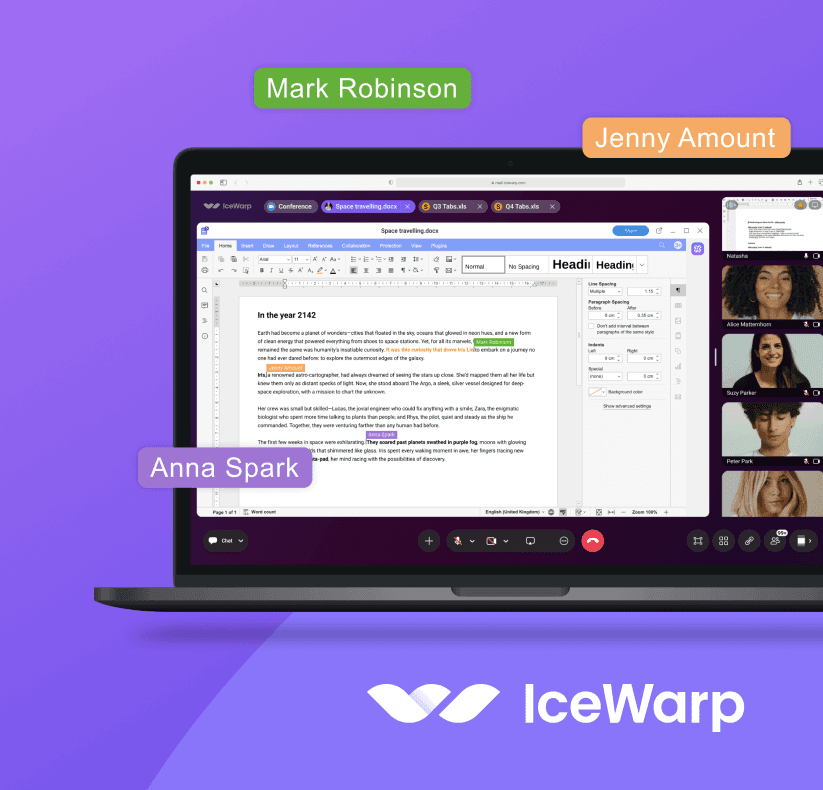
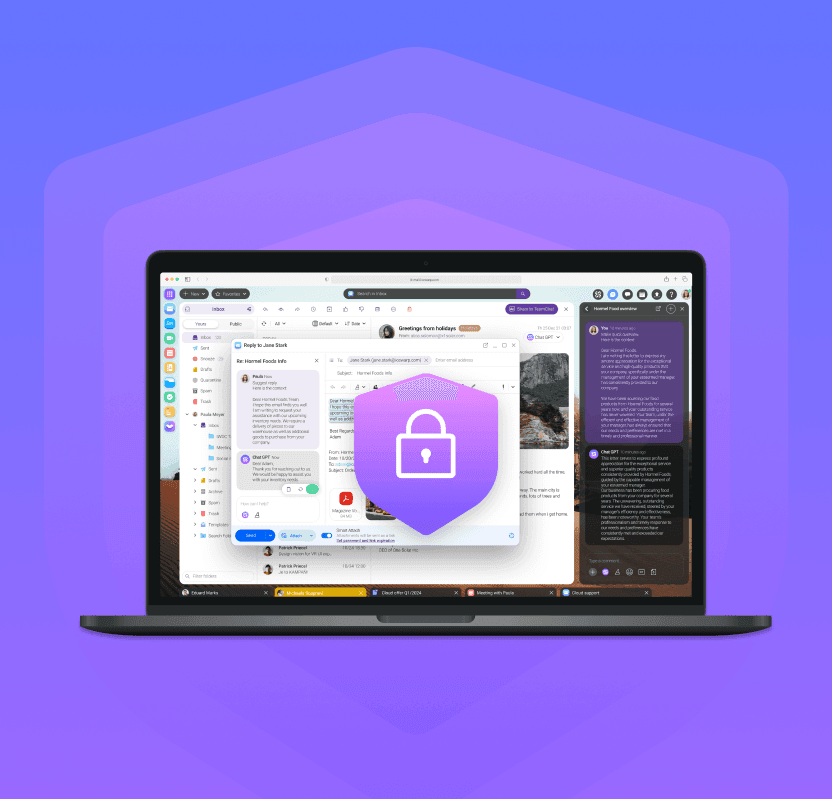
IceWarp brings these core collaboration tools together in one integrated workspace, combining email, shared calendars, TeamChat, Conferences, files, collaborative document editing, and unified search.
Give your team fewer tools to manage and more room to focus. Start your free 30-day IceWarp trial.
Frequently Asked Questions (FAQ)
What is context switching at work?
Context switching happens when employees move between different tasks, applications, or communication channels. Each switch requires them to mentally reorient before fully focusing on the next task.
How does context switching affect productivity?
Frequent context switching interrupts focus and adds time spent rebuilding context. Research cited by Harvard Business Review found that employees switched between applications and websites nearly 1,200 times per day, with reorienting consuming almost four hours per week.
What is tool sprawl?
Tool sprawl occurs when an organization uses a growing number of separate or overlapping applications. This can spread communication, files, tasks, and notifications across multiple platforms and increase the complexity of everyday work.
What is notification debt?
Notification debt is the accumulated demand for attention created by unread messages, mentions, task updates, reminders, and other alerts across multiple applications. It can encourage employees to repeatedly check different platforms throughout the day.
How can a unified workspace reduce context switching?
A unified workspace brings core collaboration tools such as email, chat, calendars, meetings, files, and document editing into one environment. This reduces the number of applications employees need to navigate and the number of places they need to search for information.