Key Takeaways
- Data residency isn't data sovereignty. Where email is stored doesn't necessarily determine which laws apply.
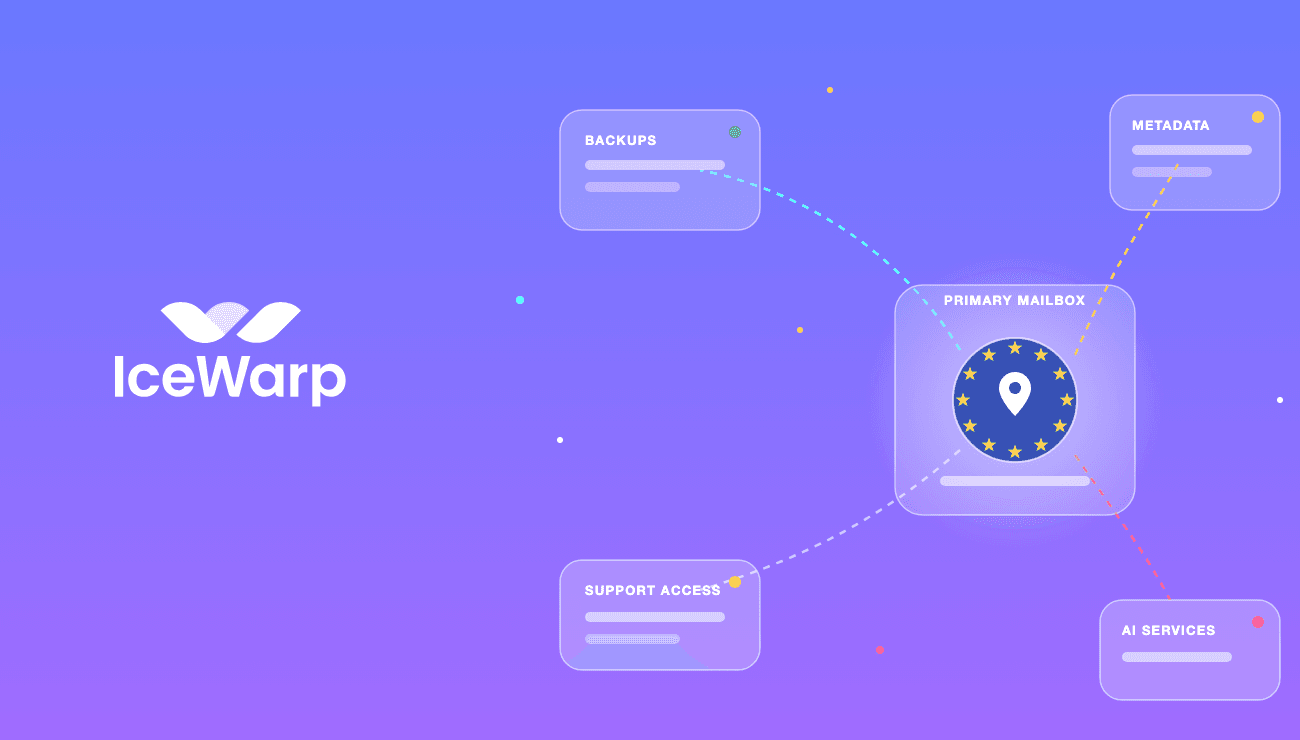
- EU hosting doesn't mean all data stays in Europe. Backups, metadata, and third-party services may operate elsewhere.
- Server location doesn't determine legal obligations. GDPR and laws such as the US CLOUD Act may both apply.
- Transparency builds trust. Organizations should know where data is processed, who can access it, and how it's protected.
- Look beyond hosting location. Evaluate jurisdiction, encryption, subprocessors, and data portability.
Residency, Sovereignty, and Localization: What's the Difference?
Three terms often get mixed up:
- Data residency: Where your data is physically stored. For email, this includes mailbox databases, attachments, backups, and potentially logs and other associated information.
- Data sovereignty: Which countries' laws and authorities may exercise jurisdiction over your data, depending on its location, the provider's legal structure, and other factors.
- Data localization: Legal or regulatory requirements to store or process certain types of data within a specific country or region.
Consider a German company using an American cloud provider with servers in Ireland. Its email data physically resides in the EU. However, the provider may also be subject to US laws, such as the US CLOUD Act, which can require certain US providers to disclose data within their possession, custody, or control, even when that data is stored abroad.
In other words, where your email lives and whose laws may apply to it are two different questions.
What "EU Email Hosting" Actually Means (and What It Doesn't)
When an email provider advertises EU email hosting, you can reasonably expect your primary mailboxes to be stored in European data centers. But that doesn't necessarily mean all your email data stays within EU borders.
Email infrastructure involves much more than messages and attachments. Backups, metadata, diagnostic logs, and supporting services may be stored or processed in different locations.
Backups and disaster recovery
Your primary mailbox might be hosted in Amsterdam, while disaster recovery copies or backup snapshots are stored in another region. Ask whether geographic restrictions cover backup infrastructure as well as production systems.
Metadata and diagnostic logs
Even when message content remains in the EU, associated information such as sender addresses, timestamps, access logs, and security telemetry may be handled elsewhere.
Technical support and remote access
Support engineers outside the EU may have access to systems containing personal data. Depending on the circumstances, this can introduce international data transfer considerations.
Third-party services and AI features
Modern email platforms may rely on external providers for spam filtering, malware detection, transcription, or AI-assisted writing. Some features may involve sending message content or metadata to servers outside the EU.
Email also crosses borders. Messages sent to recipients outside the EU will generally reach infrastructure operated by their email providers. EU hosting is an important starting point, but it doesn't guarantee that all your data stays within EU borders or that access to it is restricted to EU-based personnel.
Which Country's Laws Apply to Your Email?
For organizations subject to the General Data Protection Regulation (GDPR), its rules govern not only how personal data is processed, but also how it can be transferred outside the European Economic Area (EEA).
That doesn't mean GDPR prohibits transferring data outside the EEA. Such transfers are permitted under certain conditions, for example when the destination country has been recognized as providing adequate data protection or when appropriate safeguards, such as Standard Contractual Clauses (SCCs), are in place.
Things become more complicated when laws from different countries overlap. For example, the US CLOUD Act can require certain American providers to disclose data in response to valid legal requests, even when that data is stored in Europe. This can create conflicts between US disclosure obligations and EU data protection requirements.
The takeaway? Don't evaluate an email provider solely by its server location. Understand who operates the service, who can access the data, and which legal obligations may apply.
What Auditors and Enterprise Customers Will Ask
Data residency isn't just a technical concern. It can also matter during enterprise procurement, supply chain security reviews, and compliance audits involving frameworks such as NIS2, ISO 27001, HIPAA, or PCI DSS.
A prospective customer might ask whether their information will leave the EU. An auditor might want evidence of how personal data is protected and which third parties can access it. Expect questions like:
- Where are messages, attachments, backups, and metadata stored and processed?
- Who can access the data, including administrators, support staff, and subprocessors, and where do they operate?
- How are encryption keys managed, and how does the provider respond to government requests?
Being able to answer these with clear, documented evidence helps build trust. The goal is to understand your data flows, demonstrate appropriate safeguards, and answer questions with evidence rather than assumptions.
6 Questions to Ask Before Choosing an Email Provider
Whether you're evaluating EU email hosting for the first time or reconsidering your current provider, start with these questions:
1. Where is our data stored and processed? Include primary mailboxes, attachments, backups, metadata, and diagnostic logs.
2. Which jurisdictions apply? Identify the provider's operating entity, corporate structure, and relevant legal obligations.
3. Who controls encryption and access? Ask where encryption keys are managed, who can decrypt data, and which support teams can access your systems.
4. Which third parties are involved? Review subprocessors, their locations, and any international data transfers.
5. How are government access requests handled? Understand the provider's disclosure procedures, notification policies, and approach to conflicting legal obligations.
6. Can we change our hosting arrangements? Evaluate deployment options, data portability, and what happens if you decide to switch providers.
Choosing the right email provider starts with asking the right questions. IceWarp is a European provider that offers both Cloud and Self-hosted deployment, so you can decide where your business communications live. That way you can make informed decisions about where your business communications live.
Frequently Asked Questions (FAQ)
What is email data residency?
Email data residency refers to the geographic location where email data is physically stored. This includes mailboxes, attachments, backups, and potentially metadata and logs.
Does EU email hosting guarantee GDPR compliance?
No. EU hosting can help organizations meet data residency requirements, but GDPR compliance also depends on how personal data is processed, protected, accessed, and transferred.
What's the difference between data residency and data sovereignty?
Data residency concerns where data is physically stored, while data sovereignty concerns which countries' laws and authorities may exercise jurisdiction over it. Data stored in the EU may still be subject to certain foreign laws.
Can US authorities access emails stored in Europe?
Under the US CLOUD Act, certain US providers may be required to disclose data within their possession, custody, or control, even when stored in Europe. Such requests must follow applicable legal procedures.
Can email data leave the EU even with an EU hosting provider?
Yes. Backups, metadata, technical support, and third-party services may involve processing outside the EU. Emails sent to recipients abroad also generally reach infrastructure outside the region.
What should businesses check before choosing an email provider?
Businesses should verify data storage locations, applicable jurisdictions, encryption and access controls, subprocessors, government access policies, and data portability options.